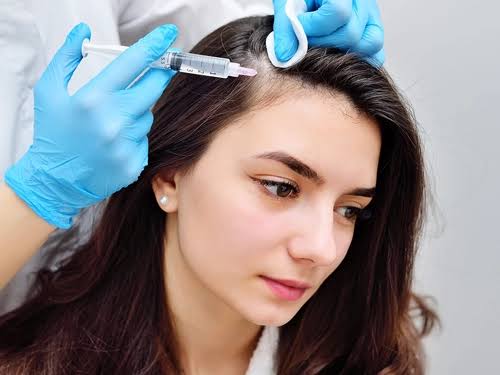
Hair thinning and progressive hair loss can affect confidence and quality of life. While established hair-loss treatments such as medications and PRP continue to be used for appropriate patients, newer regenerative approaches are also being studied for hair restoration.
Exosome Therapy for Hair Loss is one such emerging treatment. Exosomes are small extracellular vesicles involved in cell-to-cell communication and can carry various biological molecules. Research into their potential role in hair follicle activity and hair regeneration has increased in recent years.
Clinical studies have reported promising changes in hair density and thickness in some patients, but the current evidence is still developing. Studies differ in exosome source, preparation, concentration, delivery method and treatment protocol, making it difficult to establish one standardized treatment approach.
At Dr. Izharul Hasan – PRP Treatment Center, Delhi, exosome therapy may be considered for selected patients after evaluation of the pattern, severity and likely cause of hair loss.
This guide explains what exosome therapy is, how it is used for hair loss, potential benefits, the treatment procedure, expected results, safety considerations and how it differs from PRP and GFC.
What Is Exosome Therapy for Hair Loss?
Exosome therapy is a regenerative treatment approach that uses exosome-containing preparations with the aim of influencing cellular communication and supporting tissue or follicular activity.
Exosomes are extracellular vesicles released by cells. They can contain signaling molecules, proteins, lipids and other biological components involved in communication between cells.
In hair research, exosomes are being investigated for their potential effects on processes involved in the hair-growth cycle and the scalp environment.
It is important to understand that exosome products are not all the same. Their biological source, preparation method, composition and quality can vary considerably. Therefore, patients should ask what product or preparation is being used and how it is intended to be administered.
How May Exosomes Help With Hair Loss?
Hair follicle activity is influenced by complex interactions between follicular cells, growth signals, inflammation and the surrounding scalp environment.
Research suggests that exosome-based approaches may influence cellular signaling involved in processes such as tissue repair, angiogenesis and follicular activity.
The proposed mechanisms are still being investigated, and the exact response can depend on the source and characteristics of the exosome preparation as well as the patient’s underlying hair-loss condition.
Current clinical evidence is encouraging but remains limited by small study populations, different treatment protocols and relatively short follow-up periods.
Who May Consider Exosome Therapy for Hair Loss?
Exosome therapy may be considered for selected patients experiencing:
- Early or moderate hair thinning
- Pattern hair loss
- Reduced scalp hair density
- Progressive thinning where viable follicles remain
- Certain non-scarring forms of hair loss
- Patients looking for a non-surgical regenerative treatment option
However, not every type of hair loss should be treated with exosomes.
Hair loss can result from genetics, hormonal factors, nutritional deficiencies, scalp disorders, illness, medications, stress and other causes. Identifying the likely cause is an important part of treatment planning.
Exosome Therapy for Male Pattern Hair Loss
Androgenetic alopecia, commonly called male pattern hair loss, is one of the conditions being studied in relation to exosome-based treatments.
Some clinical studies have reported improvements in hair density and thickness following exosome-based treatment in patients with androgenetic alopecia. However, these studies have used different exosome sources and treatment protocols, so results cannot automatically be generalized to every product or patient.
Exosome therapy may therefore be considered as a potential treatment option in selected cases rather than a guaranteed cure for male pattern baldness.
Exosome Therapy for Female Hair Loss
Women can experience hair thinning for many different reasons.
Female pattern hair loss, nutritional deficiencies, hormonal changes, stress, thyroid disorders and other medical factors can all contribute to hair shedding or reduced density.
A proper assessment is particularly important in women because treating the underlying cause may be more important than simply choosing a regenerative procedure.
Exosome therapy may be discussed as an option for selected patients after evaluation.
Exosome Hair Treatment Procedure
The exact procedure can vary according to the exosome preparation and delivery method used.
A typical treatment plan may involve the following steps.
1. Hair and Scalp Assessment
The doctor evaluates:
- Pattern of hair loss
- Hair density
- Degree of thinning
- Scalp condition
- Duration of hair loss
- Previous treatments
- Relevant medical history
Additional investigations may be suggested when clinically appropriate.
2. Selection of Exosome Preparation
The source and characteristics of the preparation are important.
Patients should be informed about the type of exosome preparation being used, its intended route of administration and the treatment protocol.
Because exosome products can differ substantially, the term “exosome therapy” does not describe one universally standardized product.
3. Scalp Preparation
The treatment area is cleaned and prepared using appropriate infection-control precautions.
4. Exosome Application
Depending on the treatment protocol, the preparation may be delivered to the scalp using a selected method such as topical application with a delivery technique or injection-based administration.
The exact method should be determined by the treating clinician and the specific product being used.
5. Post-Treatment Instructions
After treatment, patients receive instructions regarding scalp care, hair washing and activities that may need to be avoided temporarily.
What Are the Potential Benefits of Exosome Hair Therapy?
Research into exosome-based hair treatment has identified several potential areas of interest.
May Support Hair Follicle Activity
Exosomes contain biological signals that may influence cellular communication around the hair follicle.
May Improve Hair Density in Selected Patients
Some clinical studies have reported increases in hair density following exosome-based treatment, particularly in androgenetic alopecia. However, study designs and treatment protocols vary.
Non-Surgical Treatment Approach
Exosome therapy does not involve surgical transplantation of hair follicles.
May Be Considered for Early Hair Thinning
Regenerative approaches are generally more relevant when viable but weakened or miniaturizing follicles are still present.
Can Be Incorporated Into an Individualized Treatment Plan
Depending on the patient’s diagnosis, exosome therapy may be considered alongside other appropriate hair-loss management strategies.
Exosome Therapy vs PRP for Hair Loss
Exosome therapy and PRP Hair Treatment are different regenerative approaches.
PRP (Platelet-Rich Plasma) is prepared from the patient’s own blood and contains platelets, plasma and various growth factors.
Exosome-based treatments use extracellular vesicle preparations obtained from a biological source and are not equivalent to PRP.
The two treatments therefore differ in:
- Biological source
- Preparation method
- Composition
- Proposed mechanism
- Treatment protocol
Current evidence does not justify saying that exosomes are automatically better than PRP for every patient. Treatment choice should depend on the patient’s hair-loss diagnosis, treatment goals, suitability and available evidence.
For more information about PRP, see our detailed guide on PRP Hair Treatment in Delhi.
Exosome Therapy vs GFC Hair Treatment
Exosome therapy and GFC (Growth Factor Concentrate) are also distinct treatments.
GFC is a blood-derived growth-factor preparation produced from the patient’s own blood using a specific processing protocol.
Exosome therapy uses an exosome-containing preparation from a biological source.
Therefore, they should not be treated as interchangeable terms.
The choice between GFC and exosome therapy should be based on the patient’s condition, treatment goals, clinical assessment and the specific preparation being offered.
How Many Exosome Sessions Are Needed?
There is currently no universally established number of exosome sessions for hair loss.
Treatment schedules can vary depending on:
- Type and severity of hair loss
- Exosome preparation
- Delivery method
- Treatment protocol
- Patient response
- Overall treatment objectives
Because protocols differ between studies and clinical settings, a fixed number of sessions should not be presented as appropriate for every patient.
When Can Exosome Hair Treatment Results Be Seen?
Hair growth is a gradual process, so results should not be expected immediately after treatment.
Some clinical studies have reported improvements in hair density or thickness during follow-up periods, but the timing and degree of response vary.
Patients should therefore expect treatment assessment over months rather than days.
Clinical photographs, hair-density assessment and follow-up examinations can help evaluate whether treatment is producing a meaningful response.
Can Exosome Therapy Regrow Hair in Completely Bald Areas?
Exosome therapy should not be promoted as a guaranteed method of regrowing hair in completely bald areas.
Regenerative treatments are generally more relevant when viable hair follicles remain.
When follicles are permanently destroyed or absent, treatment options can be different and may include surgical hair restoration depending on the patient’s situation.
Is Exosome Therapy Safe?
Safety depends on the specific product, its source, manufacturing quality, preparation, route of administration and clinical technique.
Some published hair-loss studies have reported relatively few adverse effects, but the overall evidence base remains limited and heterogeneous. A 2025 clinical review identified only nine relevant clinical studies involving 125 patients, highlighting the still-developing nature of the evidence.
Possible local effects can include:
- Temporary redness
- Mild swelling
- Tenderness
- Itching or irritation
- Discomfort at the treatment site
More importantly, patients should understand exactly what exosome product is being used.
Regulatory authorities have also raised safety concerns regarding certain unapproved exosome products. For example, the U.S. FDA has warned about unapproved exosome products and reported serious adverse events associated with some products marketed as regenerative medicine.
This makes product sourcing, quality control, appropriate clinical use and informed consent especially important.
Is Exosome Therapy FDA Approved for Hair Loss?
Patients should be careful with claims that an exosome product is “FDA approved” for hair loss.
The regulatory status depends on the specific product and intended use. The FDA has specifically warned consumers about unapproved exosome products marketed for various medical conditions.
Therefore, clinics and patients should avoid assuming that every product marketed as an “exosome treatment” has received regulatory approval for hair loss.
Exosome Therapy vs PRP vs GFC: What Is the Difference?
| Treatment | Main Source | Basic Approach |
|---|---|---|
| PRP | Patient’s own blood | Platelet-rich plasma is prepared and administered to the scalp |
| GFC | Patient’s own blood | Growth-factor-rich concentrate is prepared and administered |
| Exosome Therapy | Biological exosome preparation | Exosome-containing preparation is delivered to the scalp |
These treatments should not be ranked simply as “best,” “better” or “strongest.”
The appropriate treatment depends on the patient’s diagnosis, hair-loss stage, clinical requirements, treatment goals and the evidence available for the particular treatment protocol.
Exosome Hair Treatment Aftercare
After treatment, patients should follow the specific instructions provided by their clinician.
General precautions may include:
- Avoid unnecessary touching or scratching of the scalp immediately after treatment.
- Follow the recommended hair-washing instructions.
- Avoid irritating scalp products unless advised.
- Follow any prescribed hair-loss treatment as directed.
- Avoid activities specifically restricted by the treating clinician.
- Contact the clinic if unusual or persistent symptoms develop.
When Should You Consult a Hair-Loss Specialist?
Consider professional evaluation if you notice:
- Progressive hair thinning
- Increasing hair shedding
- Receding hairline
- Widening of the hair part
- Reduced overall hair density
- Patchy hair loss
- Scalp scaling, itching or inflammation
- Hair loss following illness or major stress
Early evaluation can help identify the underlying cause and determine whether regenerative treatment is appropriate.
Exosome Therapy for Hair Loss in Delhi
If you are searching for Exosome Therapy for Hair Loss in Delhi, the first step should be an individual hair and scalp assessment.
At Dr. Izharul Hasan – PRP Treatment Center, Delhi, patients can discuss concerns such as hair thinning, progressive hair loss and reduced hair density and understand whether an exosome-based treatment is appropriate for their particular situation.
The clinic is located in Karol Bagh, New Delhi, making it accessible to patients looking for hair and regenerative treatment options in Delhi.
Location: View PRP Treatment Center on Google Maps
Frequently Asked Questions About Exosome Hair Therapy
What is exosome therapy for hair loss?
Exosome therapy is an emerging regenerative approach that uses exosome-containing preparations to influence cellular signaling and potentially support hair follicle activity.
Is exosome therapy effective for hair loss?
Early clinical research has reported improvements in hair density and thickness in some patients. However, the evidence is still developing, with small studies and differences in products and treatment protocols.
Is exosome therapy better than PRP?
Not necessarily. Exosome therapy and PRP are different treatments. There is currently insufficient evidence to say that one is universally better for all types of hair loss.
Can exosome therapy be used for female hair loss?
It may be considered for selected women, but the underlying cause of hair loss should first be assessed.
How many exosome sessions are required?
There is no universally standardized number of sessions. The schedule depends on the treatment protocol, product, hair-loss condition and individual response.
Does exosome therapy permanently cure hair loss?
No. Exosome therapy should not be presented as a guaranteed permanent cure. Hair loss can continue to progress depending on its underlying cause.
Can exosome therapy regrow hair on a completely bald scalp?
It should not be expected to reliably regenerate hair where viable follicles are absent or permanently damaged.
Is exosome therapy the same as stem cell therapy?
No. Exosome therapy and stem cell therapy are not the same treatment. Exosomes are extracellular vesicles that can carry biological signaling molecules; they are not stem cells.
Can exosome therapy be combined with PRP or GFC?
In selected cases, different treatments may be considered as part of an individualized hair-loss management plan. Combination treatment should be planned by the treating clinician.
What should I ask before taking exosome treatment?
Ask about the source of the exosome preparation, product identity, preparation and storage, intended route of administration, treatment protocol, potential risks and what evidence supports its use for hair loss.
Final Takeaway
Exosome Therapy for Hair Loss in Delhi is an emerging regenerative approach being studied for conditions such as androgenetic alopecia and other forms of hair thinning.
Early clinical research is promising, with some studies reporting improvements in hair density and thickness. However, the evidence is not yet as standardized as for established hair-loss treatments, and studies vary considerably in exosome source, preparation and treatment protocol.
For this reason, exosome therapy should be approached with realistic expectations rather than claims of guaranteed hair regrowth.
A proper diagnosis and scalp assessment should come first. Depending on the patient’s condition, options may include PRP, GFC, mesotherapy, medication, lifestyle or nutritional correction, or other hair-restoration approaches.
Medical Disclaimer
This article is for general educational purposes and does not replace an individual medical consultation. Exosome preparations and treatment protocols can vary, and evidence for hair-loss applications is still evolving. Treatment suitability, potential benefits, risks and expected results should be discussed with a qualified healthcare professional before treatment.

